Who’s Liable When Parked Trucks or Heavy Equipment Cause Fatal Crashes?

Parking heavy equipment, semi-trailers, or other large machinery carelessly, especially overnight can be an unseen killer. A manlift or cherry picker’s boom arm left hanging into the road overnight. A trailer ramp jutting into a driving lane. An unsecured load protruding inches into a fast-moving traffic stream. These hazards can impale or decapitate a driver or passenger in a split second. When operators, lessors, or motor carriers ignore basic parking safety, they can be held legally and financially responsible for devastating injuries or wrongful deaths.

Board-Certified Personal Injury Trial LawyerAs a Board-Certified Personal Injury Trial Lawyer (Texas Board of Legal Specialization, since 1988) with over 40 years of catastrophic injury experience. Attorney David P. Willis is licensed in Texas and New York, but with the assistance of local counsel can assist injured clients in other states with a co-counsel agreement. Willis has handled severe injury and wrongful death cases involving improperly parked trucks, broken down trucks and trailers jackknifed in the lane of traffic, dangerous trailers, and defective heavy equipment. His firm understands how to investigate these incidents and hold all negligent parties accountable. This article explains when negligent parking turns deadly, who can be liable, what safety rules apply, and what victims or families should do next.

manlift at home depot in lane

Common Equipment Involved in Negligent Parking Accidents

Motorists and motorcyclists face deadly risks from a wide variety of heavy equipment and commercial vehicles when improperly parked. The most frequently cited types include:

  • Manlifts and cherry pickers – especially when boom arms are left extended into roadways
  • Excavators and backhoes – often parked with buckets or arms jutting into lanes or walkways
  • Flatbed trailers with overhanging loads – pipes, beams, or turbines left unsecured
  • Dump trucks and lowboy trailers – with raised beds or ramps creating blind hazards
  • Dumpsters, trailers and temporary storage containers – parked on neighborhood streets overnight
  • Boom lifts and aerial lifts – particularly in side streets or night work zones
  • Cranes and lifting rigs – whose arms or cables obstruct pedestrian or vehicle traffic
  • 18-wheelers or semi-trucks – parked on narrow shoulders without lighting or reflective warnings
  • Mobile work platforms and lifts – left partially blocking bike lanes or shoulders


Each of these can pose life-threatening dangers if not parked with proper clearance, visibility, and safety measures.

Legal Duty of Care: Lessee, Driver, or Operator

To hold a broker or shipper liable, a plaintiff must prove negligence—that the party breached a duty and caused harm. In truck crash litigation, this may include:

  • Improper loading: Overweight, unbalanced, or unsecured cargo
  • Failure to warn: Not disclosing hazardous materials or weight to the driver
  • Negligent selection of carrier: Hiring unsafe or unqualified trucking companies
  • Control over transportation: Exercising too much operational control can create liability


Legal Note:
Brokers often argue they are “not motor carriers” and cannot be liable. However, courts sometimes “pierce the label” if the broker exerted functional control over the shipment or directed the loading, directions, or securing of the materials being shipped.

Who Is Responsible for Loading a Truck?

If you rent or lease heavy machinery — or drive a commercial truck — you must exercise reasonable care to ensure it does not pose a hidden hazard. This means:

  • Retracting or securing any arms, booms, ramps, or liftgates before parking
  • Never leaving equipment or trailers blocking traffic lanes or walkways
  • Following all posted parking laws and regulations
  • Using required hazard lights, reflective triangles, or cones to warn other drivers


When an operator fails to take these steps, courts will likely find a breach of duty, and the injured victim (or surviving family) can hold them financially responsible.

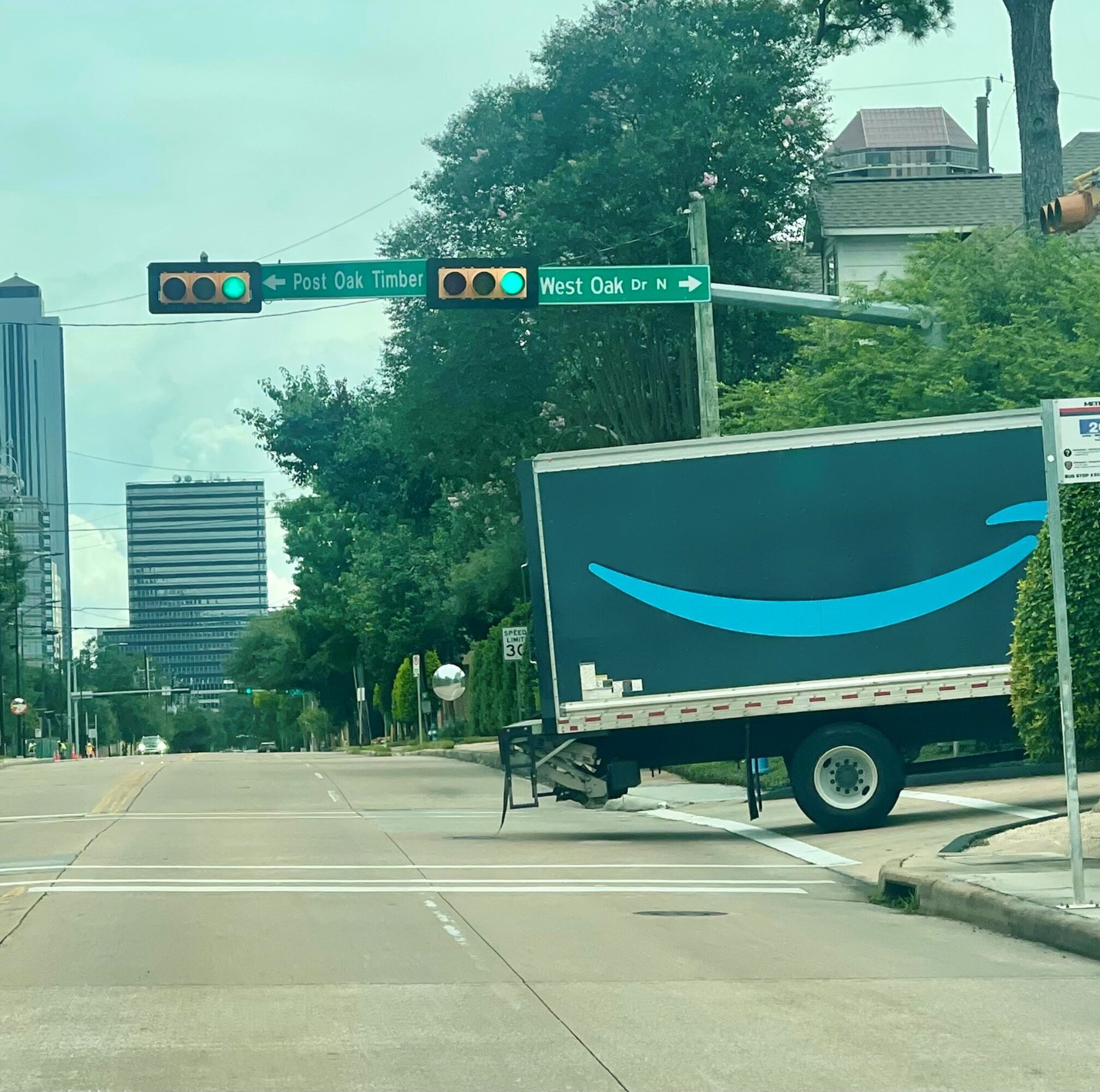
amazon truck in lane of traffic

Why This Problem Goes Beyond Just Construction Equipment

While most people picture bulldozers, manlifts, or cranes on a worksite, the same risks apply to commercial trucks and trailers left parked illegally or unsafely. For example:

  • An 18-wheeler parked partially on a highway shoulder at night without reflectors or flares
  • A flatbed trailer with an unsecured pipe, log or equipment overhang jutting into a lane of traffic
  • A boom lift or excavator left with its arm extended into a public street overnight
  • Commercial package delivery truck parked blocking traffic while making a delivery or opening gate
  • A dump truck ramp or lowboy trailer bed sticking out in a busy parking lot

All of these can be deadly — and all are preventable.

Legal Duty of Care: Lessee, Driver, or Operator

If you rent or lease heavy machinery — or drive a commercial truck — you must exercise reasonable care to ensure it does not pose a hidden hazard. This means:

  • Retracting or securing any arms, booms, ramps, or liftgates before parking
  • Never leaving equipment or trailers blocking traffic lanes or walkways
  • Following all posted parking laws and regulations
  • Using required hazard lights, reflective triangles, or cones to warn other drivers


When an operator fails to take these steps, courts will likely find a breach of duty, and the injured victim (or surviving family) can hold them financially responsible.

Relevant Safety Rules: OSHA and FMCSA

For worksite equipment, OSHA standards require employers to secure all moving parts and ensure no protrusions create hazards to the public.

For commercial trucks, the Federal Motor Carrier Safety Regulations (FMCSRs) under 49 CFR §392.22 specifically require that if a truck is stopped on the shoulder or in a travel lane, the driver must immediately set out warning devices — usually reflective triangles or flares — within 10 minutes.

Failure to follow these rules can strengthen a claim for negligence or even gross negligence if it shows reckless disregard for public safety.

Lessor (Rental Company) Liability: Failure to Warn or Maintain

It’s not just the operator who may be at fault. An equipment rental company or trailer leasing company may be partly liable if they:

  • Rent out machinery with known defects, like a boom that drifts outward when parked
  • Fail to warn lessees about safe parking requirements, especially for unusual risks
  • Fails to include with the rental safety cones, flagging and/or reflectors
  • Skip required inspections or maintenance that could prevent an arm or ramp from moving unexpectedly


In these cases, the lessor can be held liable for negligent failure to warn or negligent maintenance.

Employer & Motor Carrier Liability

If an employee parks a truck or piece of machinery unsafely during the course of work, the employer or motor carrier is usually liable under the doctrine of respondeat superior. Brokers and shippers may also share fault if they force unrealistic schedules that require drivers to park illegally or dangerously to rest or unload.

Real-World Examples of Parking Hazards

These real incidents show how deadly these hazards can be:

  • Cook County, IL— A man was decapitated when his SUV struck an excavator arm left extended overnight into a travel lane. The contractor and equipment lessor were sued for failing to retract the boom or warn motorists.
  • Fresno, CA — In Mendoza v. J.B. Hunt, a driver died after hitting a semi parked on I-5 without cones or hazard lights. The jury awarded $2.5 million, citing violations of FMCSA’s emergency parking rules.
  • Dallas, TX — A motorcyclist was impaled by a boom lift arm left sticking into a side street without reflective markers. The victim’s family sued for gross negligence.
  • Miami, FL — A hotel guest walking in a parking lot was killed when she struck her head on an unsecured lowboy trailer ramp left extended without barricades. The family recovered $1.8 million.


These tragedies show that negligent parking is far from an abstract danger — it kills real people every year.

Catastrophic Injuries Caused by Negligently Parked Equipment or Trailers

When a trailer, boom arm, or heavy equipment intrudes into a traffic lane or parking area, the consequences for unsuspecting drivers, motorcyclists, bicyclists, or pedestrians can be devastating. These incidents often cause catastrophic injuries such as:

  • Traumatic brain injuries (TBI) from striking a hard metal edge or being ejected from a vehicle
  • Spinal cord injuries, resulting in paraplegia or quadriplegia
  • Severe orthopedic injuries, like crushed bones or amputations
  • Internal injuries, including organ damage or massive bleeding
  • Impalement injuries, when a boom or ramp penetrates the body
  • Decapitation or fatal head trauma, especially in high-speed collisions

These injuries lead to lifelong care needs, emotional trauma, and permanent loss for families.

What Victims May Be Entitled To

If a loved one was severely injured or killed because of careless parking, your lawyer may pursue compensation for:

  • Medical expenses and future care
  • Funeral and burial costs
  • Lost wages and lost future earning capacity
  • Pain and suffering
  • Loss of companionship

Punitive damages in cases of gross negligence

FAQ: Common Defenses & How They’re Beaten

Q: Shouldn’t the driver have seen the parked trailer?

Not always. At night, a boom arm, ramp, or trailer edge may be completely invisible if no cones, reflectors, or hazard lights are used — especially at highway speeds.

Q: Doesn’t the victim share fault?

Some states apply comparative negligence. But failing to comply with safety rules (like FMCSA) often outweighs partial driver error.

Q: Can the rental company really be liable?

Yes. If a lessor fails to warn about hazards or rents defective equipment that won’t lock into position, courts often find them partially responsible.

How to Prevent These Deadly Accidents

Simple steps save lives:

  • Retract and secure all moving parts of equipment and trailers
  • Never block active lanes or pedestrian paths
  • Always use reflective triangles, flares, hazard lights, and barricades
  • Follow federal, state, and local rules for roadside parking and overnight stops
  • Equipment lessors and motor carriers should train operators and provide written safety instructions

Improper Parking Accident - Talk to a Lawyer

When someone’s careless parking puts innocent motorists or pedestrians in harm’s way, the law provides recourse. If you or a loved one has suffered catastrophic injuries or a wrongful death due to an improperly parked trailer, dumpster, storage locker, boom lift, or truck, you may have the right to hold the operator, employer, lessor, lessee, homeowner, or motor carrier fully accountable.

Don’t navigate this alone. Contact a dedicated truck accident lawyer with over 40 years of experience to help you gather evidence, prove negligence, and fight for the compensation you deserve.

Call 1-888-LAW-2040 – Available 24/7