
When a steer tire blows out on a semi-truck, it can turn an 80,000-pound vehicle into a deadly missile — and in seconds, lives can be lost. At the Willis Firm we represent victims of catastrophic truck crashes caused by equipment failure, negligence, improper maintenance, and tire defects. These include jackknifes, truck rollovers, and devastating crashes that begin with a front-axle tire blowout.

Attorney David P. Willis, a Board-Certified Personal Injury Trial Lawyer (Certified by the Texas Board of Legal Specialization since 1988) and a former attorney for the Supreme Court of Texas, leads our firm’s nationwide litigation team. With over 40 years of legal experience, he helps families pursue justice when defective tires, unqualified drivers, or negligent maintenance cause catastrophic truck wrecks and rollovers..
Below, we break down what causes these steer tire blowouts, how drivers can survive them, and who may be legally responsible when a preventable tire failure changes lives forever not only to the innocent passing motorist, but often to the truck driver as well.
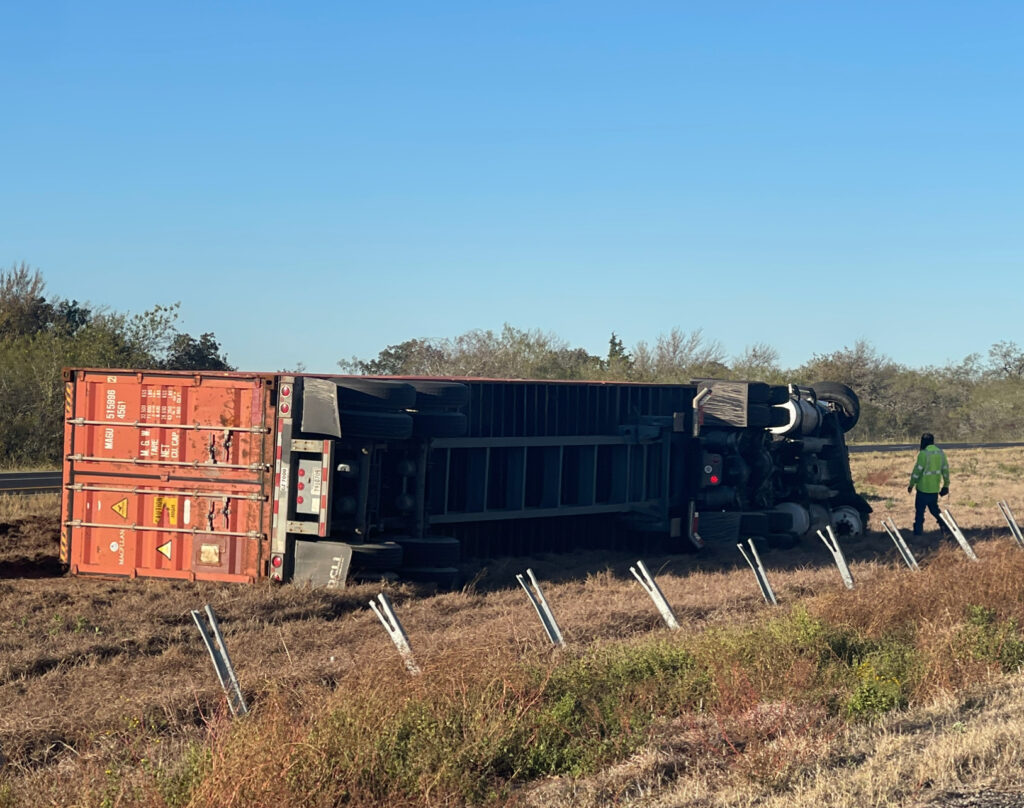
 The steer tires are located on the truck’s front axle — and when one of them fails at high speed, the results can be catastrophic. A blown left steering tire can cause the truck to veer sharply left, potentially into oncoming traffic or the median. A right-side steer tire failure may pull the truck into a ditch, barrier, or highway shoulder.
This sudden shift in directional control can cause the vehicle to veer violently across traffic lanes or off the road entirely. If the driver is hauling a tanker, flatbed, or heavy load, the risk of 18-wheeler rollover increases substantially. The danger also extends to nearby vehicles — a runaway tractor-trailer and load can crush smaller vehicles, cause secondary collisions, or trigger chain-reaction pileups. In many fatal truck accidents, the event begins with an unexpected steer tire blowout that catches the driver off guard and offers little time to react. Catastrophic injuries and deaths can happen in a flash, especially at highway speeds with loads upward of 60-80,000 lbs.
 Truck Driver
If the driver skipped inspections or ignored visible tread damage, they may share fault.
Carrier
Failure to replace aging tires or provide training may create direct corporate liability.
Tire Manufacturer
Flawed designs, casing defects, or bonding failures may trigger a product liability lawsuit.
Broker or Maintenance Provider
If a broker chose an unsafe carrier, or a service vendor failed to properly install or inspect tires, those parties can also face claims.

A blown front steering tire on a semi-truck can cause massive destruction in seconds. Preventing these wrecks starts with solid tires, vigilant inspections, and strong emergency training.
Even with decades of experience, no driver can prevent a catastrophe if a tire was defective from the start. That’s why accountability matters. Victims deserve answers — and those responsible, whether it’s a tire manufacturer, negligent fleet, or repair contractor, must be held fully liable.
Semi-Truck crash and tire defect attorney David P. Willis has over 40 years of experience handling complex defective tire and truck rollover crash claims. As a Board-Certified Personal Injury Trial Lawyer and former attorney for the Supreme Court of Texas, he leads our efforts to uncover the truth and fight for justice nationwide.