
 David P. Willis is a licensed in Texas and New York and is also Board-Certified Personal Injury Trial Lawyer, certified since 1988 by the Texas Board of Legal Specialization. He has spent more than 40 years fighting trucking companies and manufacturers for victims and families across the country. He also previously served as an attorney for the Texas Supreme Court, giving him insight into complex appellate issues, evolving regulatory rules, and high-stakes litigation. If a driverless truck has caused you harm, you can’t afford delay. We move quickly to lock down evidence, launch investigations, and stop companies from blaming the technology—or you.
 When someone is injured in a crash involving a traditional 18-wheeler, the investigation often starts with reviewing the driver’s logs, black box data, and dashcam footage. In a driverless truck case, the technology is far more complex—and much more volatile. These trucks rely on real-time data streaming, machine-learning decisions, and multi-sensor input (such as lidar, radar, and high-definition cameras). Every second of that data can be crucial in proving what the truck “saw,” how it reacted, and whether a failure in the system caused the crash. But in a driverless truck accident, there’s even more to secure — and it disappears fast:
The longer you wait, the more difficult it becomes to prove how the crash occurred and who is legally responsible. Do not rely on the company to preserve what helps your case. They’re already protecting themselves. You need someone protecting youWithout legal action, this evidence is often overwritten, purged, or buried. That’s why victims need a truck accident attorney experienced in both traditional trucking law and AV system failures.
 The trucking industry wants the public to believe that if there’s no driver, there’s no fault. That couldn’t be further from the truth. In autonomous vehicle (AV) cases, truck accident fault or liability is more complicated—not less. These crashes often involve a web of corporate actors, each pointing fingers to avoid paying the victim.
The carrier that owns the truck may claim the AV system failed. The developer of the AV system may claim the mapping was outdated. A subcontractor may have been responsible for sensor calibration. Even a remote safety driver, if used, may be partially liable. In some cases, software updates made hours before the crash altered how the vehicle responded. Our legal team is trained to trace every possible fault—from design and deployment, to maintenance, to post-crash concealment.
We pursue claims based on:
No matter how advanced the truck may be, the law still requires companies to exercise reasonable care. And when they don’t, they’re responsible for the injuries and deaths that follow.
Truck accident cases are already complex. Adding autonomous vehicle technology only increases the stakes. You need a lawyer who understands trucking law, product liability, and evolving federal rules.
David P. Willis has:
We work directly with clients in Texas and New York, and we represent victims nationwide through formal partnerships with licensed attorneys in your state. You’ll never pay unless we recover money for you.
Call Now If You Were Injured by a Driverless Truck
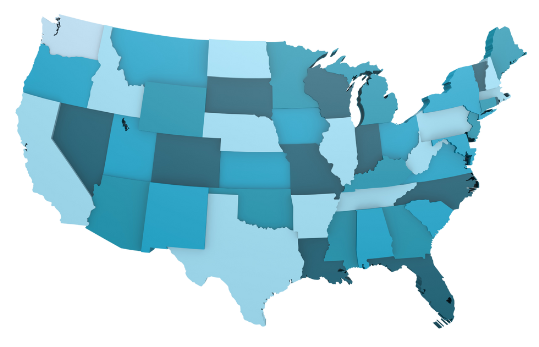 The Fong bill may soon allow trucks to operate across the country without human drivers and with fewer safety requirements. But no law removes your right to sue when you’re seriously injured.
If a driverless truck hit you—or a loved one was killed—don’t wait. Let us help you protect your future.